
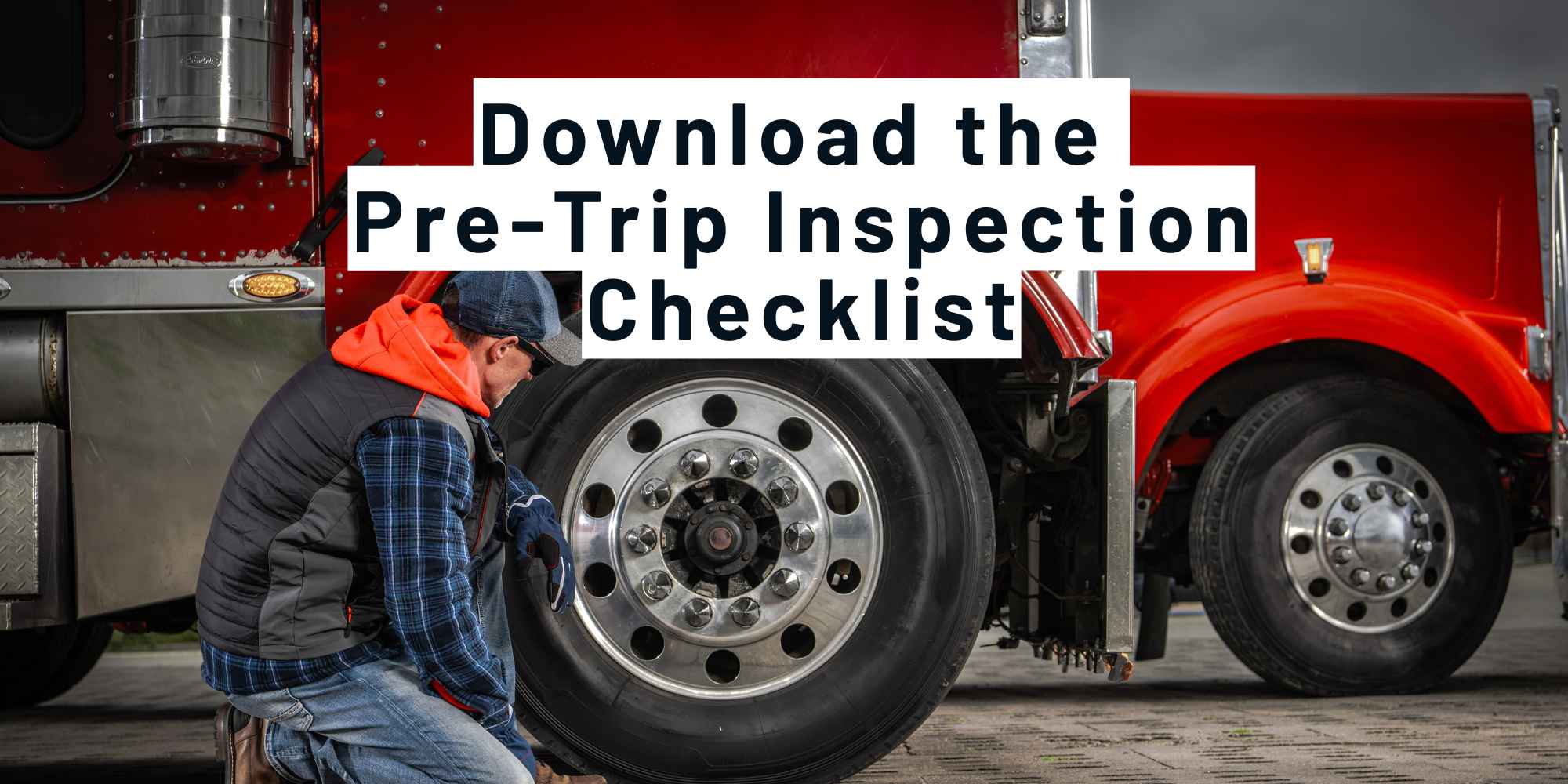
A good pre-trip inspection takes minutes and catches the problems that turn into roadside violations, breakdowns, and crashes. It’s also required: before driving, federal rules say the driver must be satisfied the vehicle is in safe operating condition.
Below is a practical walkaround checklist for tractor-trailers and other commercial trucks, organized in the order most drivers work around the vehicle. Download the free printable version to keep in the cab.
What the Rules Require
- Before driving: under 49 CFR 396.13, the driver must be satisfied the vehicle is in safe operating condition, review the last driver vehicle inspection report (DVIR), and sign it if defects were noted and repaired.
- After driving: under 49 CFR 396.11, drivers of property-carrying vehicles must prepare a written DVIR when they find or are told about a defect.
Free download
Get the printable Pre-Trip Inspection Checklist (PDF)
A 2-page walkaround checklist — engine, cab, lights, tires, brakes, suspension, and coupling — with a defect and sign-off section.
We’ll email the PDF to you. No spam — unsubscribe anytime.
The Pre-Trip Inspection Checklist
1. Before You Start
- Review the last DVIR — any reported defects repaired and signed off
- Check that required documents are in the cab: registration or cab card, insurance, IFTA license, permits
- Approach the vehicle looking for leaks underneath, leaning, or damage
2. Engine Compartment
- Oil, coolant, power steering, and washer fluid levels
- Belts and hoses: no cracks, fraying, or looseness
- No oil, coolant, or fuel leaks; wiring secure
3. In the Cab
- Gauges and warning lights normal (oil pressure, temperature, air pressure)
- Air brakes: pressure builds normally, low-air warning works, no excessive leakage
- Parking brake holds; service brakes apply evenly
- Horn, wipers, heater and defroster, steering play
- Mirrors and windshield clean, adjusted, and uncracked
- Emergency equipment: a charged, secured fire extinguisher and three reflective warning triangles
- Seat belt works and latches
4. Lights and Reflectors
- Headlights (low and high beam)
- Turn signals and 4-way flashers, front and rear
- Brake and tail lights, lenses intact
- Clearance and marker lights, reflectors, and reflective tape on tractor and trailer
5. Tires, Wheels, and Brakes
- Tread depth: at least 4/32” on steer tires and 2/32” on all other tires, per 49 CFR 393.75
- Proper inflation; no cuts, bulges, or exposed cords; duals not touching
- Wheels and rims uncracked; lug nuts tight with no rust trails; hub seals not leaking
- Brake chambers, hoses, and slack adjusters secure
6. Suspension and Steering
- No broken spring leaves or leaking air bags
- Shocks and mounts secure, no leaks
- Steering linkage: no loose, bent, or missing parts
7. Coupling and Trailer
- Fifth wheel locking jaws closed around the kingpin; release arm locked
- Air and electrical lines connected, sealed, and not chafing or dragging
- Landing gear fully raised and crank handle secured
- Trailer doors secure, frame undamaged, cargo secured
Found a defect? Don’t drive a vehicle with a defect that affects safe operation. Report it on your DVIR and get it repaired.
Do Your Pre-Trip in the App
A paper checklist works. But it’s easy to lose, hard to read, and the office never sees it until it’s too late. Digital Permit Book includes custom DVIRs: build a pre-trip or post-trip inspection that matches your equipment, and drivers complete it on their phone, item by item. Every submitted inspection is stored with the vehicle and trailer, so you can see what was checked and what defects were reported.
And when an officer asks for paperwork, One-Tap Inspection puts every document for the driver, vehicle, trailer, and company on one screen — current, and available even with no signal.
▶ Watch the 3-minute demo · Start a free trial
Studying for Your CDL Test?
This checklist is built for daily inspections on the job. For the CDL skills test, use your state’s CDL manual — the pre-trip portion of the test has its own required items and wording, and it varies by state and vehicle class.
Frequently Asked Questions
Is a pre-trip inspection required by law?
Yes. Under 49 CFR 396.13, drivers must be satisfied a commercial vehicle is in safe operating condition before driving and must review the last DVIR.
How long should a pre-trip inspection take?
A thorough walkaround usually takes about 15 to 30 minutes, depending on the vehicle and how familiar the driver is with it.
What is the minimum tread depth for truck tires?
At least 4/32 of an inch on steer tires and 2/32 of an inch on all other tires, measured in a major tread groove (49 CFR 393.75).
Do I need to fill out a DVIR every day?
For property-carrying vehicles, a written DVIR is required when the driver finds or is told about a defect. Many companies require one after every trip as policy.
Can drivers complete a DVIR on their phone?
Yes. Electronic DVIRs are allowed, and Digital Permit Book lets you build custom pre-trip and post-trip inspections that drivers complete in the app.


%2520(1).jpeg)
